
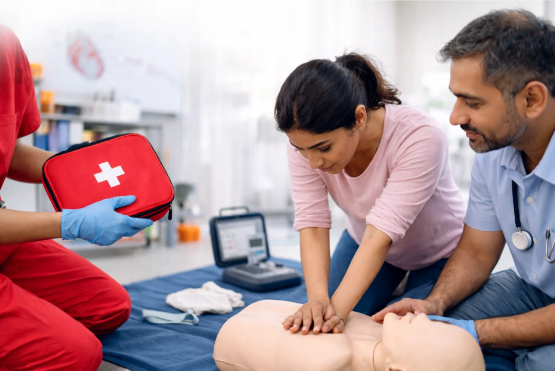
Someone gets trained in first aid and suddenly they see danger everywhere. A stumble becomes a potential neck injury. Chest pain becomes a cardiac event. Falls become trauma. This paranoia annoys untrained people. Seems excessive. Actually it’s accurate risk perception. Untrained people underestimate danger constantly. They see something and think it’s fine. Someone trips and gets up. Must be okay. Actually they might have internal bleeding. Back injuries. Neck damage. They won’t know for hours. By then complications develop. Trained people recognise this. They assess properly. They’re cautious. This isn’t paranoia. It’s a realistic understanding of how quickly minor incidents become serious. An advanced first aid course intensifies this perception. You see risks layered on risks. You understand cascading problems. You take nothing for granted. The difference between basic awareness and genuine preparedness becomes obvious once you’ve experienced proper training.
Why Confidence Without Knowledge Kills
Someone takes basic first aid and feels ready for emergencies. They’re not. They’ve memorised sequences. They haven’t faced chaos. They haven’t managed uncertainty. They’ve practiced on mannequins not real trauma. Real emergencies are messier. Someone’s bleeding but also confused. Is it shock or diabetes? Is the breathing difficulty from injury or anxiety? Basic training doesn’t prepare you to sort this. You freeze. Or worse, you act confidently in the wrong direction. The untrained person with high confidence is dangerous. They make decisions based on assumption not assessment. They direct bystanders incorrectly. They delay proper treatment. Advanced first aid course training teaches humility. You understand how little you know. You assess carefully. You admit uncertainty. You don’t act unless you’re sure.
The Secondary Injury Problem
Untrained people trying to help often cause more damage. They move someone with spinal injury. They apply tourniquets wrong. They give water to someone who shouldn’t have it. Their intentions are good. Their execution is harmful. This happens constantly. Someone collapses. Untrained bystanders panic. They do something. Anything. Often the wrong thing. The person’s condition worsens. Then trained responders arrive to find additional injuries caused by well-meaning help. Advanced first aid course training teaches restraint. Knowing when not to act. Understanding when waiting for professionals is better than attempting intervention. This is counterintuitive. People expect training to mean doing more. Advanced training teaches doing less but better.
Why People Misremember Everything
During a crisis, memory becomes unreliable. Someone trained takes a course. Learn procedures. Six months later there’s an emergency. They can’t remember the steps. Panic overwrites memory. Training seems useless. Actually the problem is insufficient training depth. Basic courses teach superficially. People memorise without understanding. When stress hits, surface memory disappears. Advanced training builds deeper understanding. You don’t memorise steps. You understand principles. When panic hits, principles remain. You can improvise correctly. You can adapt. The training survives stress because it’s built on understanding not memorisation.
The Untrained Person’s Panic Spreads
An emergency happens. An untrained person responds frantically. They’re panicking. They’re shouting. They’re disorganised. Everyone around them catches the panic. Calm disappears. Chaos spreads. A trained responder handles the same situation differently. Calm assessment. Clear directions. Controlled response. Panic doesn’t spread. People trust the person who knows what they’re doing. They follow instructions. They cooperate. Outcomes improve dramatically. This isn’t a coincidence. Training creates composure. Composure creates competence. Competence creates outcomes.
Why Advanced Training Reveals Basic Training’s Inadequacy
Someone does basic first aid. Feels competent. Then they take advanced training. Suddenly they realise how unprepared they were. The gaps are enormous. They never understood shock properly. They didn’t know about secondary injuries. They couldn’t assess priorities. Basic training was dangerously incomplete. Advanced first aid course training isn’t just additional skills. It’s a complete reconceptualisation of emergency response. You move from following steps to actually understanding situations.
The Muscle Memory That Survives Panic
Advanced training drills scenarios repeatedly. Real scenarios. Realistic stress. Your body learns responses. When an actual emergency happens and your conscious mind shuts down, your body responds correctly. This is muscle memory. It’s built through repeated practice under realistic conditions. Basic training doesn’t create this. You’ve done the technique once. Maybe twice. Under calm conditions. That’s not enough. Advanced training creates automatic responses that function when thinking stops.
Conclusion
Most people vastly overestimate their capability after basic first aid training while advanced first aid course training teaches the gaps and builds genuine competence. Advanced training reveals how untrained responders cause secondary injuries through well-meaning but misdirected help. It teaches assessment over action, humility over confidence, and builds muscle memory that survives panic. The difference between someone who took a basic course and someone who took advanced training becomes obvious in actual emergencies. One freezes or acts wrongly. The other manages effectively.